
How Cold Should the Water Be for Ice Bathing – And Does Temperature Really Matter?
One of the most common questions from those new to cold water bathing is also one of the most misunderstood. Many people believe the goal is to get as close to zero degrees as possible – that this is where the magic happens. But the research tells a more nuanced story.
The Body's Threshold for Cold Exposure
The skin begins registering water as cold at temperatures below 35 degrees. But the physiologically relevant threshold – where the body activates its stress responses in earnest – sits at around 15 degrees. Below that temperature, vasoconstriction, noradrenaline release and activation of brown adipose tissue are triggered in ways that produce measurable effects on the body.
This means 15 degrees is not a gentle entry point. It is actually cold enough to deliver most of the benefits that research points to.
What the Research Says About the Optimal Range
A meta-analysis published in the British Journal of Sports Medicine by Hohenauer and colleagues in 2015 identified 11 to 15 degrees as the range where effects on muscle soreness and recovery were greatest. Colder water did not produce significantly better results – but shorter exposure times were needed to achieve the same effect.
Research from the University of Copenhagen has shown that noradrenaline levels in the blood increase substantially at just 14 degrees, with exposure times as short as two to three minutes. It is therefore not necessary to sit in near-zero water for ten minutes for the body to respond.
Ice Cold Versus Cold – What Is the Difference?
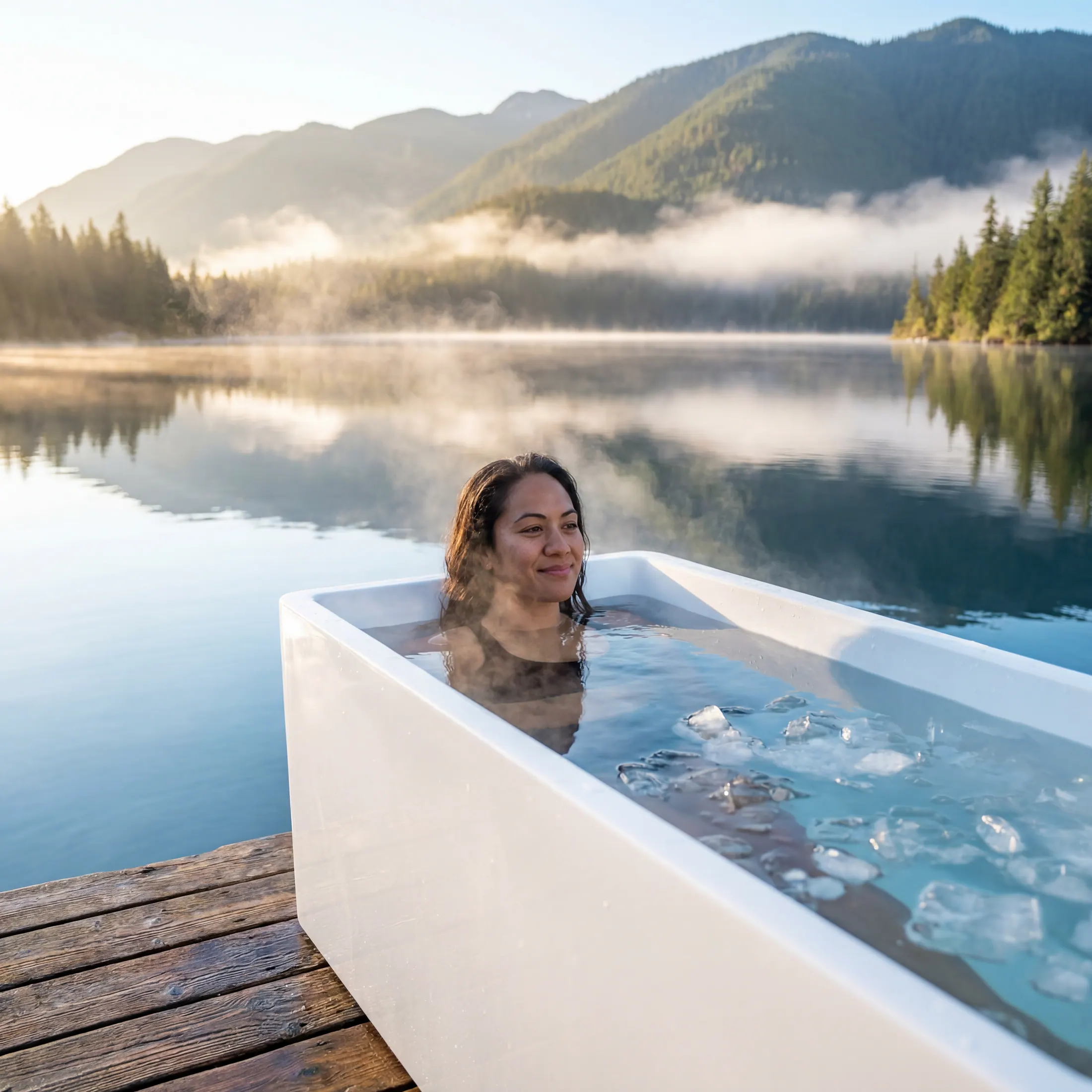
Water near zero degrees, such as a bath with ice cubes, produces a more intense and rapid physiological reaction. Vasoconstriction occurs faster, the pain experience is stronger and the risk of hypothermia increases significantly. For most people without experience, this is unnecessary and potentially inappropriate.