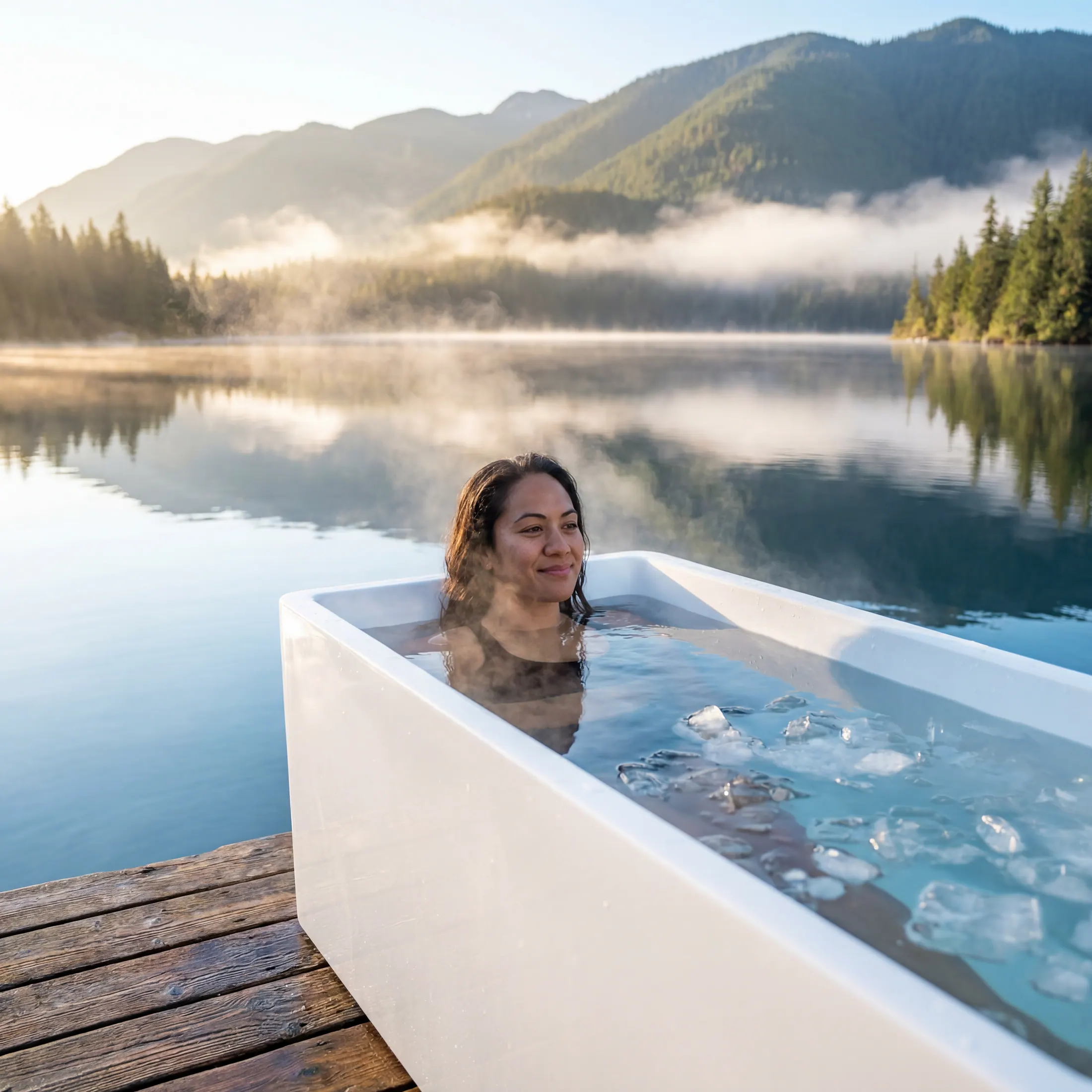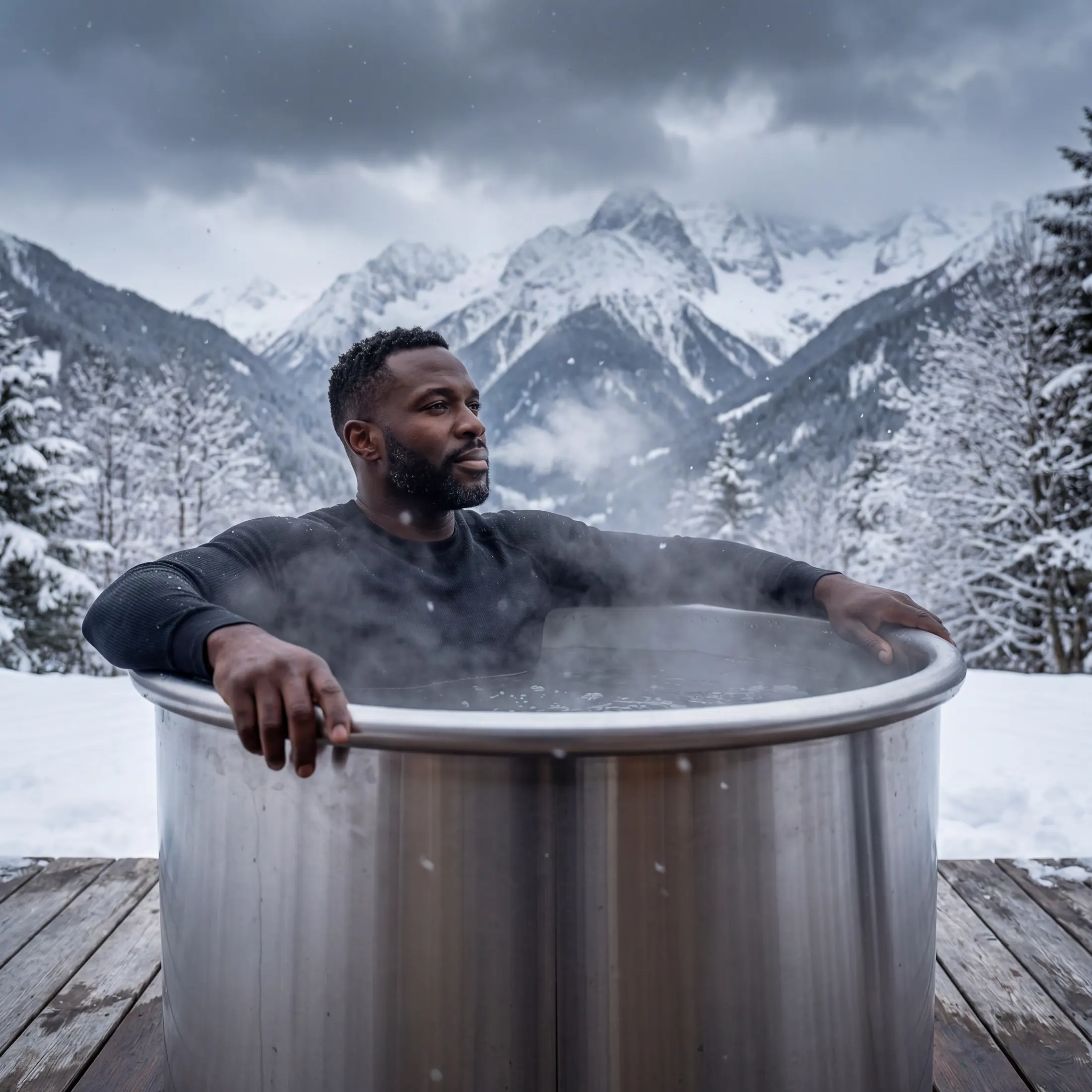

How Long Should You Stay in an Ice Bath? Temperatures and Times for Beginners and Experienced Bathers
Almost everyone who tries cold bathing for the first time asks the same question: how long should you actually stay in? The answer is more nuanced than the numbers circulating on social media, and it depends on water temperature, experience, and what you are trying to get out of it.
Water temperature matters more than you think
One minute in four-degree water is a completely different experience from one minute in twelve-degree water. The lower the temperature, the faster you reach the physiological effect - and the shorter the dip needs to be. Andrew Huberman's rule of thumb, based on existing research, is to aim for a total of 11 minutes per week spread across several sessions. It is not a magical number, but it is a reasonable guideline.
Beginners: start short
If you have never bathed cold before, 30 to 60 seconds is a perfectly reasonable first goal. The point is not to set records, but to let the nervous system get acquainted with the stimulus. Most people notice that the worst of the initial shock eases after about 30 seconds - the breathing settles and the panic fades.
Stay in until you feel that you can breathe in a controlled and relatively steady way. That is a better measure of progress than the clock.
Recommended times by temperature zone
At 10-15 degrees Celsius: 5-10 minutes is entirely reasonable for most healthy adults. The body loses heat more slowly and the experience is more manageable. At 5-10 degrees Celsius: 2-5 minutes is enough to achieve clear physiological effects. Below 5 degrees Celsius: 1-3 minutes is more than enough - and for most people, more than plenty. Truly cold water, close to the freezing point, has a rapid cooling effect and should be respected.