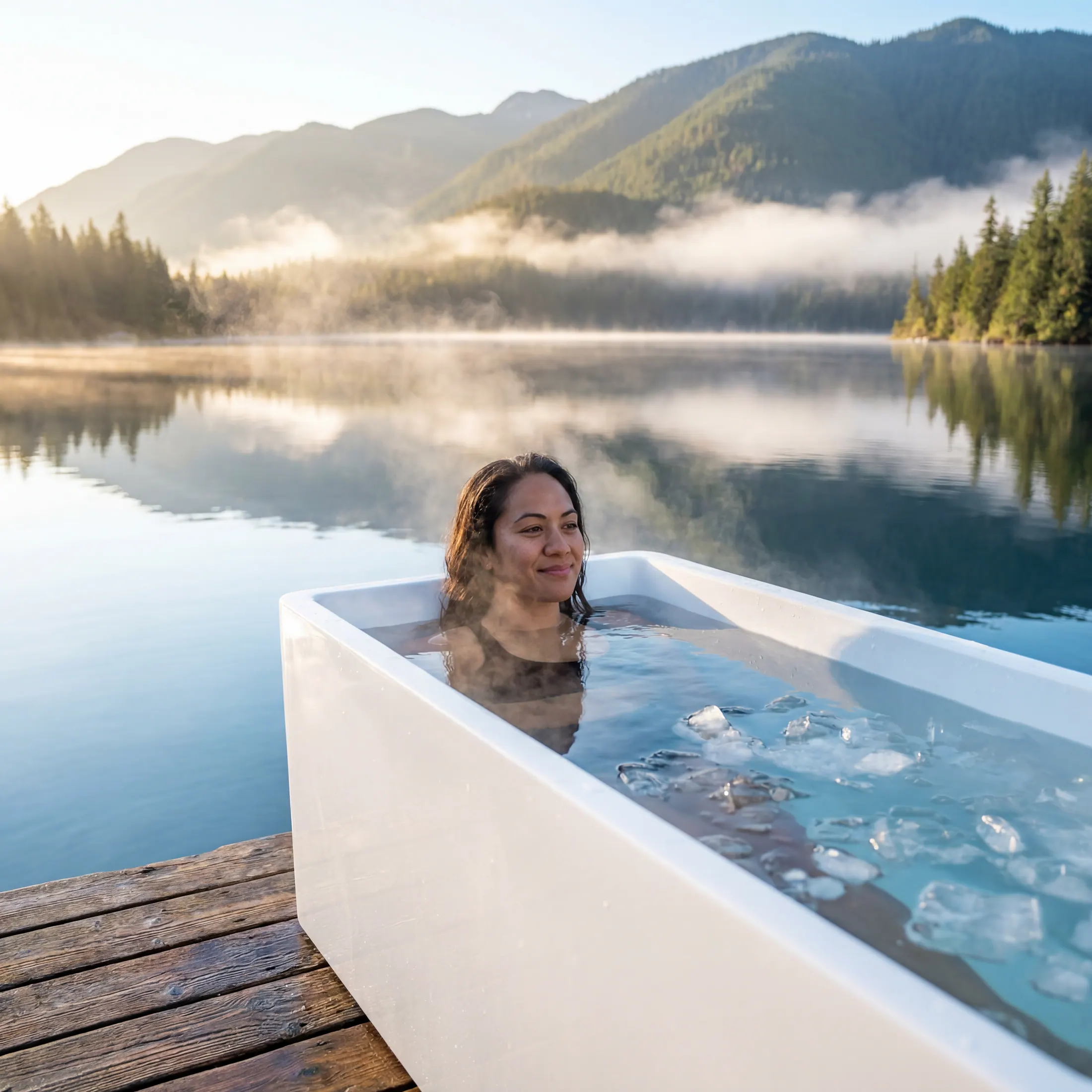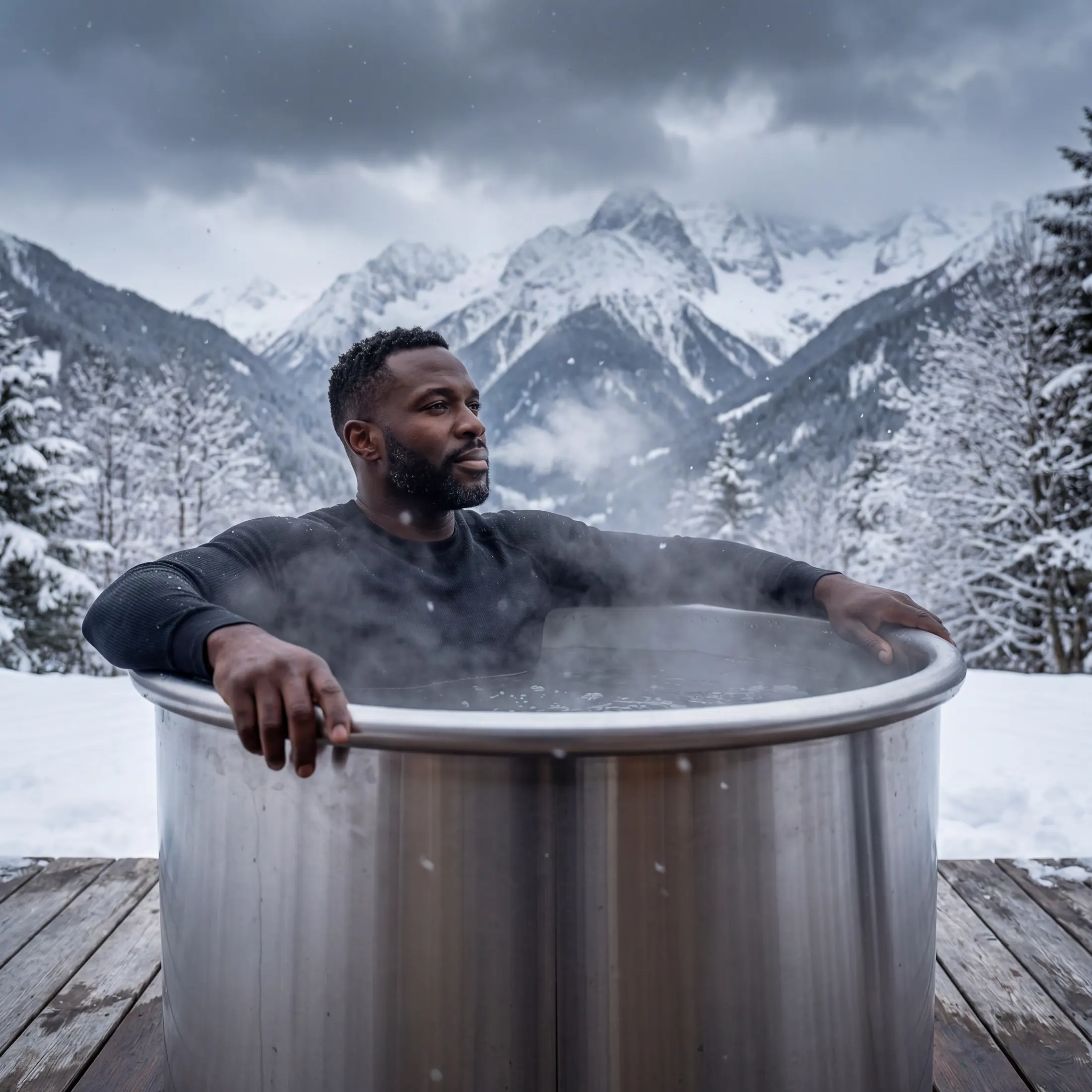

What Happens in Your Body When You Bathe in Cold Water? A Guide to the Physiology Behind Ice Baths
The first time you lower yourself into ice-cold water, the reaction is immediate and brutally honest. Your body knows exactly what it thinks - and it is not pleasure. Your breathing accelerates, your muscles tense, and every nerve is screaming at you to get out. And yet, in those very seconds, something fascinating begins to happen inside you.
The cold shock - the first thing that happens
When your skin meets water below 15 degrees Celsius, something called the cold shock response is activated. It is a primitive stress reaction in which the body, in a fraction of a second, begins to redistribute blood flow. Superficial blood vessels constrict, a phenomenon called vasoconstriction, and blood is redirected toward the vital organs - the heart, lungs, and brain.
Breathing increases dramatically, often with an involuntary gasp followed by hyperventilation. Reacting that way is not psychological weakness - it is biology. This response is inherited from a time when an unplanned plunge into freezing water was life-threatening.
Hormones that switch on
Within seconds, the adrenal glands begin releasing noradrenaline and adrenaline. Noradrenaline is especially interesting from a mental perspective - it is a signaling substance strongly linked to focus, alertness, and well-being. Research from, among others, the University of Copenhagen shows that blood levels of noradrenaline can rise by as much as 300 percent during cold bathing. That explains the clarity and calm many people feel immediately after a dip.
Cortisol, the stress hormone, is also released at first. But with regular cold bathing, studies show that the cortisol response becomes dampened over time - the body learns to handle acute stress without activating the entire alarm system. It is a clear example of hormesis: a small dose of stress makes the body stronger.