
Article
Understand what happens in the body during an ice bath - from constricting blood vessels to hormones being released. An in-depth guide to the physiology of cold bathing.
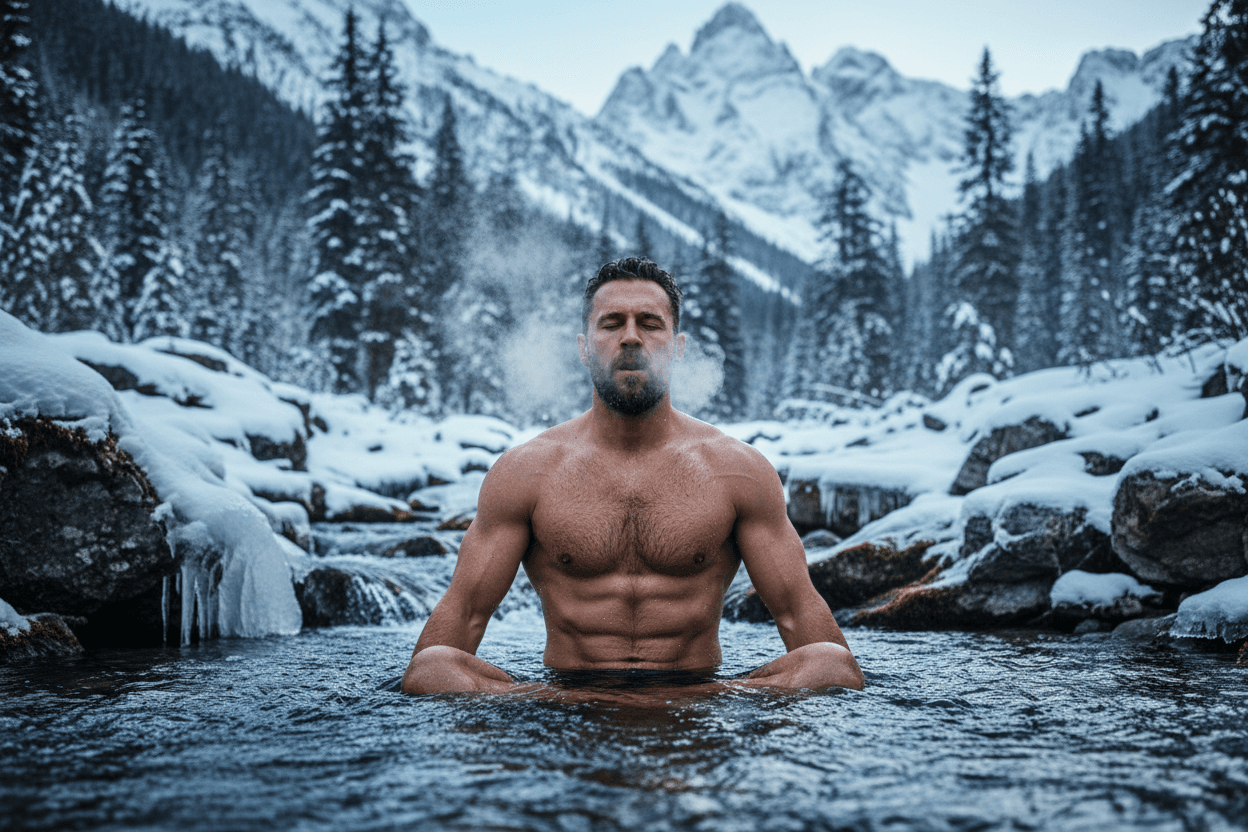
The first time you lower yourself into ice-cold water, the reaction is immediate and brutally honest. Your body knows exactly what it thinks - and it is not pleasure. Your breathing accelerates, your muscles tense, and every nerve is screaming at you to get out. And yet, in those very seconds, something fascinating begins to happen inside you.
The cold shock - the first thing that happens
When your skin meets water below 15 degrees Celsius, something called the cold shock response is activated. It is a primitive stress reaction in which the body, in a fraction of a second, begins to redistribute blood flow. Superficial blood vessels constrict, a phenomenon called vasoconstriction, and blood is redirected toward the vital organs - the heart, lungs, and brain.
Breathing increases dramatically, often with an involuntary gasp followed by hyperventilation. Reacting that way is not psychological weakness - it is biology. This response is inherited from a time when an unplanned plunge into freezing water was life-threatening.
Hormones that switch on
Within seconds, the adrenal glands begin releasing noradrenaline and adrenaline. Noradrenaline is especially interesting from a mental perspective - it is a signaling substance strongly linked to focus, alertness, and well-being. Research from, among others, the University of Copenhagen shows that blood levels of noradrenaline can rise by as much as 300 percent during cold bathing. That explains the clarity and calm many people feel immediately after a dip.
Cortisol, the stress hormone, is also released at first. But with regular cold bathing, studies show that the cortisol response becomes dampened over time - the body learns to handle acute stress without activating the entire alarm system. It is a clear example of hormesis: a small dose of stress makes the body stronger.
Dopamine and the euphoric feeling afterward
That almost euphoric feeling after an ice bath is not imagined. According to some studies, dopamine levels can rise by as much as 250 percent and remain elevated for hours, not just minutes. That is different from the quick dopamine hit of something like sugar, which is followed by an equally quick crash. Cold bathing gives a slower, steadier release.
Muscles and inflammation
The effect of cold on muscle tissue is well studied in sports. Cold temperatures reduce nerve conduction velocity, limit swelling, and slow the enzymatic processes that drive inflammation. That is why elite athletes use cold baths after hard training - not as magic, but as physiology.
One important nuance: if you train for hypertrophy, meaning muscle growth, regular cold bathing immediately after strength training may potentially inhibit part of the adaptation process. That is a trade-off worth knowing about.
The immune system and brown fat
Cold activates what is known as brown adipose tissue - a metabolically active fat that generates heat and burns calories. Brown fat is especially rich in mitochondria and responds to cold by increasing its activity. In regular cold bathers, the amount of brown fat appears to increase, which may have positive effects on metabolism.
Whether cold bathing strengthens the immune system is an active area of research. There are observational studies suggesting that regular cold bathers take fewer sick days, but causality is difficult to isolate. A generally healthier lifestyle obviously also plays a role.
A great deal happens in the body during the three minutes you spend in cold water. Understanding the physiology behind it makes it easier to relate to cold bathing - not as a trendy wellness fad, but as a tool with real, measurable effects.