
Article
Winter bathing and cold bathing have deep roots in Sweden. Learn about the tradition, find the best places for cold bathing in Sweden, and get started with your own winter dips.
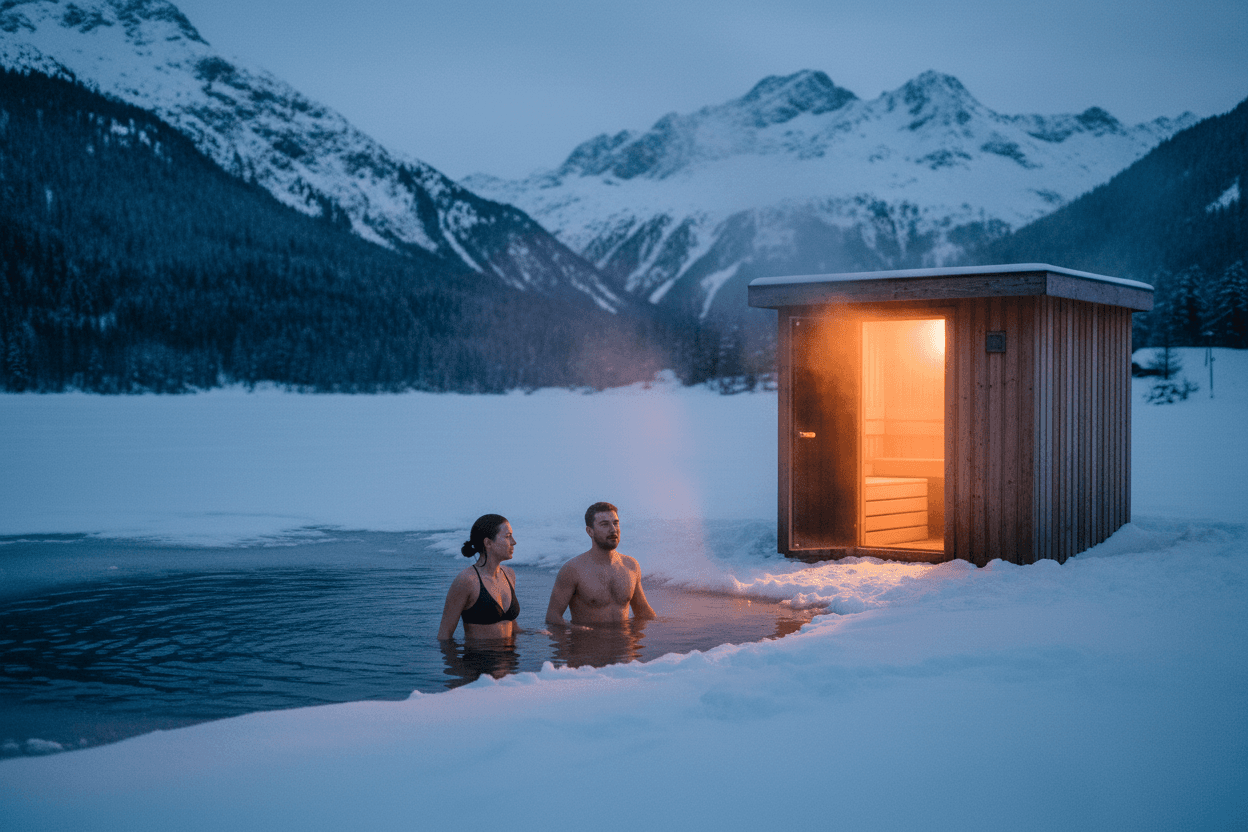
There is something distinct about seeing a line of happy people climb out of a hole in the ice with rosy cheeks and broad smiles in the middle of the darkest Swedish winter. Winter bathing has a long history in Scandinavia and is more alive now than it has been in a long time.
A Swedish tradition with deep roots
Cold bathing and winter bathing were once part of everyday life in Sweden - not as a wellness interest, but out of pure necessity. Public cold bath houses were built in Swedish cities in the late 1800s, and sauna combined with cold water was standard in northern Sweden and Finland. The Finnish sauna tradition, which has long influenced Swedish bathing culture, is built on exactly that contrast: hot sauna followed by cold water, repeated.
Cold bathing in Sweden today
In recent years, interest has exploded. Cold bathing clubs have been established along Sweden's entire coastline and by lakes and streams. The Stockholm archipelago, the Bohus coast, and the eastern side of Gotland are popular places. Classic cold bath houses such as Ribersborg in Malmo - Ribban if you are from Skane - have existed for decades and now attract more people than ever.
Bathing in ice - practical tips
If you want to bathe in an icy body of water, always make sure the ice around the opening is thick enough to hold you. At least 10 centimeters for one person. Never bathe alone, and always have a plan for how you will get back up if you slip. Ice picks or climbing claws worn around the neck are a simple safety tool that many experienced winter bathers use.
Choose a place with a ladder or an easily accessible way out. Climbing out of an ice hole with numb fingers and hands is more challenging than most people think, and a good ladder makes all the difference.
Sauna and cold bathing - the perfect pair
The classic Nordic sauna-and-cold-bath ritual is hard to beat. The heat of the sauna opens the pores, increases blood flow, and relaxes the muscles. The cold water constricts the blood vessels quickly and creates a contrast that produces an intense feeling of well-being. The alternation - going back and forth - seems to have synergistic effects that are difficult to achieve with only one of the elements.
Winter bathing in Sweden is not something new - it is an old cultural heritage that has found new relevance. And for good reason. It is hard to find a simpler or more effective way to feel alive on a dark day in February.